
Preparing Your Body for Pregnancy After 35: The Ultimate Preconception Guide


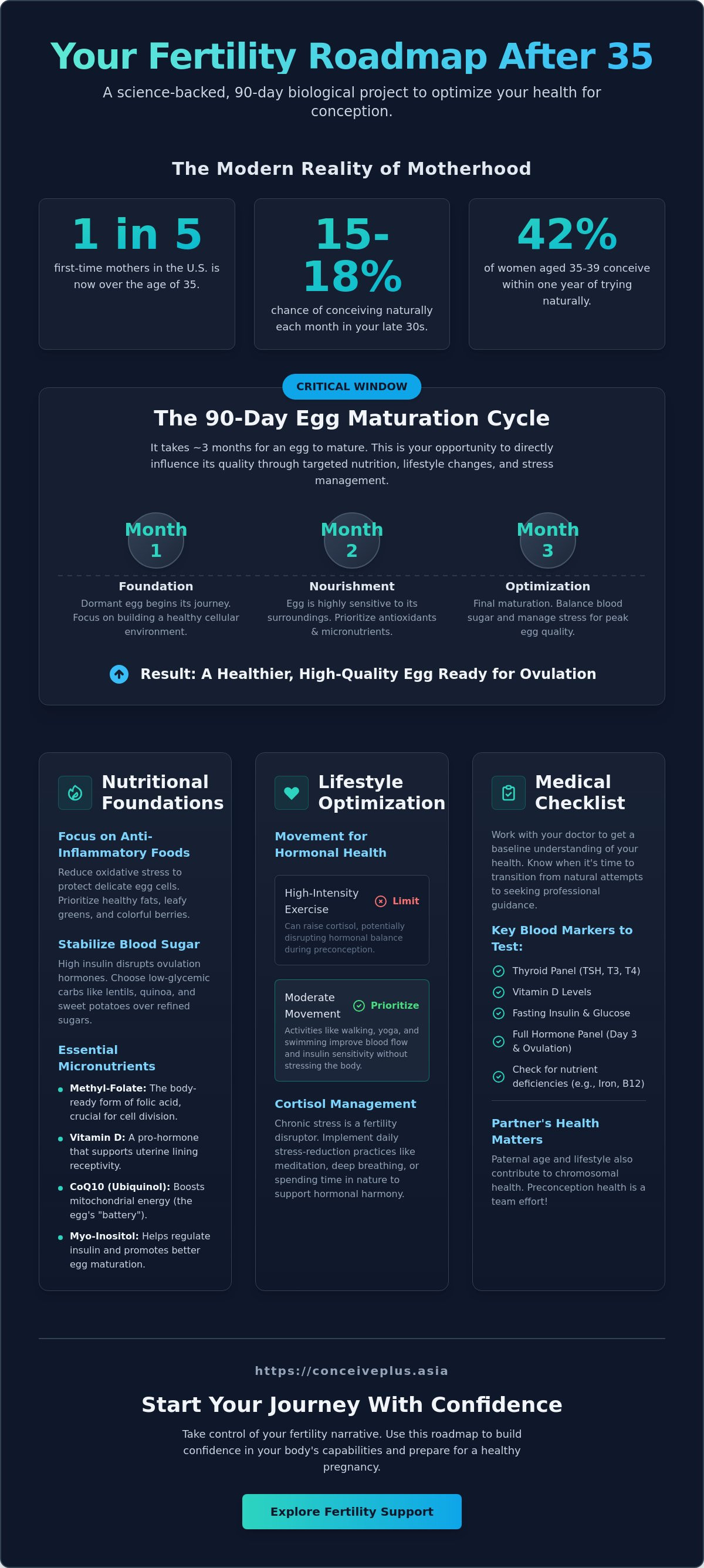
Did you know that one in five first-time mothers in the U.S. is now over the age of 35? While the term "advanced maternal age" often sparks anxiety, the reality is that birth rates for women in their late 30s and 40s are steadily rising. If you're currently preparing your body for pregnancy after 35, you aren't just fighting a biological clock; you're joining a growing community of women successfully building families on their own terms. Even with a 15% to 18% chance of conceiving naturally each month in this age group, it's vital to focus on the biological variables you can control.
It's completely normal to feel overwhelmed by conflicting supplement advice or worry about risks like gestational diabetes. We understand that you want a clear, actionable path forward. This article provides a science-backed roadmap to optimize your egg quality and metabolic health by treating the next few months as a 90-day biological project. You'll get a comprehensive preconception checklist and learn about the latest 2026 fertility resources, including updated insurance mandates and medication discount programs, to help you start this chapter with total confidence.
Key Takeaways
- Understand the 90-day egg maturation cycle and how to leverage this critical window to improve egg quality through targeted biological support.
- Learn which specific anti-inflammatory foods and micronutrients, such as folate and Vitamin D, are essential when preparing your body for pregnancy after 35.
- Identify the key blood markers to test and recognize when to transition from natural attempts to seeking professional fertility guidance.
- Discover why moderate movement and cortisol management are more effective for hormonal health than high-intensity exercise during the preconception phase.
- Develop a structured 12-week fertility reset plan to streamline your lifestyle changes and build confidence in your body's capabilities.
The Reality of Fertility After 35: Nuance Over Fear
The cultural narrative surrounding fertility after 35 often feels like a countdown to a biological dead end. However, current data tells a much more encouraging story. Between 2015 and 2024, the fertility rate for women aged 35 to 39 in the U.S. actually increased by 5%, reaching 54.3 births per 1,000 women. While fertility does decline with age, it isn't a sudden cliff. Women in this age group have a 15% to 18% chance of conceiving naturally every single month. Within a full year of trying, 42% of women aged 35 to 39 conceive without medical intervention. Clinical guidelines often refer to this stage as Advanced maternal age, but this label is simply a prompt for more proactive health management rather than a guarantee of difficulty.
To better understand the foundations of a healthy conception, watch this helpful video:
When you begin preparing your body for pregnancy after 35, you must look at your fertility through the lens of a 90-day window. It takes approximately three months for a dormant egg to fully mature before it's released during ovulation. During this critical period, the egg is highly sensitive to its environment, including your nutrient intake, stress levels, and blood sugar balance. This is why preconception care is often more impactful than prenatal care alone. You aren't just supporting a future pregnancy; you're influencing the very cells that will become your baby. Using an ovulation calculator can help you align this 90-day biological project with your natural cycles.
Egg Quality vs. Egg Quantity
You're born with all the eggs you'll ever have, so you can't increase your egg quantity. However, you have significant influence over egg quality. Quality refers to the egg's chromosomal integrity and the health of its mitochondria, which provide the energy needed for successful fertilization and early cell division. Oxidative stress from poor diet or environmental toxins can damage these delicate structures. By focusing on antioxidants and cellular health during your 90-day prep, you're protecting the "battery" of the egg to ensure it has the energy to develop into a healthy embryo.
Common 35+ Risks and How Prep Mitigates Them
While risks like gestational diabetes and preeclampsia are higher after 35, they aren't inevitable. Preparing your body for pregnancy after 35 allows you to build a metabolic safety net. Improving insulin sensitivity through a low-glycemic diet before you conceive can significantly lower your risk of blood sugar issues later. Likewise, focusing on cardiovascular health and maintaining a healthy weight supports your blood pressure throughout the demands of pregnancy. Don't forget that the partner's health matters too. Paternal age and lifestyle also contribute to the chromosomal health of the pregnancy, making preconception health a team effort.
Nutritional Foundations: Feeding Your Fertility
Your eggs require a massive amount of energy to mature properly. When you're preparing your body for pregnancy after 35, your nutritional choices act as the primary fuel for this 90-day maturation process. A successful strategy shifts away from restrictive dieting toward a fertility diet rich in anti-inflammatory fats and low-glycemic carbohydrates. Stabilizing your blood sugar is paramount. High insulin levels can disrupt the delicate hormonal balance needed for ovulation, making complex carbs like lentils and berries far superior to refined sugars. Integrating these habits early is a cornerstone of achieving a healthy pregnancy after 35.
Specific micronutrients become even more critical as we age. While most people know about folic acid, women over 35 often benefit more from methyl-folate, the bioactive form that the body can use immediately. Vitamin D also plays a starring role. It's actually a pro-hormone that supports the receptivity of the uterine lining. Beyond standard vitamins, two compounds stand out for their ability to support aging cells: CoQ10 and Myo-inositol. CoQ10, specifically in the form of Ubiquinol, boosts mitochondrial energy within the egg. Meanwhile, Myo-inositol helps regulate the insulin response and promotes better egg maturation, which is often a challenge in your late 30s.
The Power of Antioxidants
Think of antioxidants as a shield for your follicles. Vitamins C and E, along with Selenium, work together to neutralize free radicals that can lead to chromosomal errors. Oxidative stress in oocytes is the accumulation of reactive oxygen species that damages the egg's delicate cellular machinery and DNA. By reducing this "cellular rust," you help ensure that the egg has the structural integrity needed to divide correctly after fertilization. High-quality fertility support bundles often combine these antioxidants to provide a comprehensive defense during your preconception window.
Supplements Beyond the Basics
Don't overlook the supporting players like Magnesium and Omega-3 fatty acids. Magnesium is vital for regulating the stress response and improving sleep quality, both of which are essential for hormonal health. Omega-3s improve blood flow to the uterus and help manage systemic inflammation. Because the egg maturation cycle takes roughly three months, you should ideally start this nutritional protocol at least 90 days before you begin trying to conceive. This timeline ensures that the egg being released has been bathed in a nutrient-dense environment throughout its entire development phase.
Lifestyle Optimization and Cycle Awareness
Chronic stress is more than just a mental burden; it's a physiological state that can halt your reproductive system. When cortisol levels remain elevated, your hypothalamic-pituitary-ovarian (HPO) axis can become suppressed. This often leads to delayed or absent ovulation. For women over 35, protecting this axis is essential for maintaining cycle regularity. Exercise plays a dual role here. While you might be used to high-intensity interval training, switching to moderate activities like walking, swimming, or yoga is often better. Excessive physical strain can actually mimic the stress response, potentially disrupting your hormones during the delicate 90-day egg maturation window.
Quality sleep is another non-negotiable factor when preparing your body for pregnancy after 35. Melatonin, often called the "sleep hormone," is also a powerful antioxidant found in follicular fluid. It protects your eggs from damage while you rest. Poor sleep hygiene can lower both melatonin and progesterone, making it harder for a pregnancy to take hold. You should also audit your environment for endocrine disruptors. Phthalates and BPA found in plastics and scented products can mimic estrogen, confusing your body's natural signals. Reducing this toxic load is a simple yet effective step to support your hormonal balance.
Mastering Your Fertile Window
As you approach your late 30s, your cycle might start to shorten. This usually happens because the follicular phase—the time before you ovulate—speeds up. Monitoring these changes is vital. Using an ovulation calculator allows you to pinpoint your peak fertility days with precision. To get the most accurate picture, combine digital tools with physical signs like Basal Body Temperature (BBT) and changes in cervical mucus. These biomarkers provide real-time data on your hormonal shifts, helping you identify exactly when your body is ready to conceive.
Metabolic Health and Weight Management
Achieving a "Goldilocks" BMI—not too high and not too low—is key for metabolic health. Being significantly under or overweight can lead to anovulation or poor egg quality. Stabilizing your blood sugar is equally important for reducing pregnancy complications after 35. Simple swaps, like choosing whole grains over white bread or adding protein to every snack, help prevent the insulin spikes that interfere with ovarian function. By focusing on metabolic stability while preparing your body for pregnancy after 35, you're creating a hospitable environment for a growing embryo long before the pregnancy test turns positive.
The Preconception Medical Checklist
Proactive medical screening is your best defense against unexpected delays. While younger couples are typically advised to wait twelve months before seeking help, the clinical standard for those over 35 is to consult a specialist after just six months of unsuccessful attempts. By preparing your body for pregnancy after 35 through early diagnostic testing, you can address potential hurdles before they become obstacles. A comprehensive preconception workup should include blood markers like Anti-Müllerian Hormone (AMH), Follicle-Stimulating Hormone (FSH), and Thyroid-Stimulating Hormone (TSH). These tests provide a clear picture of your ovarian reserve and hormonal balance.
Beyond bloodwork, screening for underlying physical conditions is vital. Endometriosis, uterine fibroids, or Polycystic Ovary Syndrome (PCOS) can all impact your ability to conceive or carry a pregnancy. Identifying these issues early allows for targeted treatments that can improve your outcomes. Genetic carrier screening is another essential step to complete before conception. Knowing your carrier status for certain conditions allows you to make informed decisions about your family planning journey with your healthcare provider.
Hormonal Health Screening
Understanding your AMH levels is helpful, but it shouldn't be a source of "reserve doom." Think of AMH as a gas gauge that measures quantity, not the quality of the remaining eggs. Progesterone testing is equally important. It ensures your luteal phase is long enough to support an embryo's implantation. Additionally, thyroid health is a major factor in early pregnancy success. Many fertility specialists recommend a TSH level below 2.5 mIU/L to minimize the risk of early miscarriage and support fetal brain development.
Partner Health Evaluation
Fertility is a shared journey, and the male partner's health is just as significant. A semen analysis for a partner over 35 is a simple yet powerful tool. Paternal age can lead to increased sperm DNA fragmentation, which may impact fertilization rates. Lifestyle factors like smoking, heat exposure, and poor diet can all be addressed to improve sperm quality within the same 90-day window you are using for your own prep. To simplify this process for both of you, many couples choose to start with comprehensive fertility bundles that provide targeted nutritional support for both partners simultaneously.
Joint medical consultations allow you to align on your goals and timeline. Discussing your family history and any existing medical conditions together ensures that your doctor can create a personalized roadmap. This collaborative approach reduces stress and ensures that both of you are physically and mentally ready for the challenges and joys of pregnancy.
Building Your 35+ Fertility Roadmap
Your journey toward motherhood in your late 30s is a marathon, not a sprint. By the time you reach this final stage of your roadmap, you should have already established the nutritional and lifestyle habits discussed in previous chapters. A 12-week "Fertility Reset" plan acts as the ultimate bridge between preparation and action. This period focuses on fine-tuning your metabolic health and ensuring your environment is as supportive as possible. When you're preparing your body for pregnancy after 35, consistency during these final 90 days is what translates into cellular resilience and improved egg quality.
The "Two Week Wait" (TWW) can feel particularly heavy when you're acutely aware of your biological timeline. It's easy for anxiety to spike during this phase, leading to obsessive symptom spotting. Instead of focusing on every minor physical twinge, use this time to practice the mindfulness techniques you've already integrated into your routine. Transitioning from a state of "trying" to "expecting" requires a shift in mindset. Trust that you've done the science-backed work to optimize your fertility and that your body is prepared for the next chapter.
Choosing the Right Support Tools
Simplifying your daily routine can significantly reduce the mental load of preconception. Evaluating fertility bundles is a practical way to ensure you're getting comprehensive nutritional support without the guesswork of managing multiple individual supplements. It's also helpful to ground yourself in reality by reading real success stories from women who have been in your exact position and successfully conceived. Additionally, consider using specialized fertility lubricants. Unlike standard options that can hinder sperm, these are formulated to support sperm motility and longevity during your peak fertile window, giving you one more advantage while preparing your body for pregnancy after 35.
Mental and Emotional Readiness
Physical preparation is only half the battle. Building a robust support network, whether that includes your partner, a dedicated fertility coach, or a close friend, is vital for your emotional well-being. You may also need to set firm boundaries. Age-related comments from family or social media can be draining; it's okay to step away from these conversations to protect your peace. Before you begin, run through a final checklist: are your labs up to date? Is your stress managed? Are you feeling empowered by your choices? When the answer is yes, you're ready to move forward with the confidence that your body is a healthy, capable home for your future child.
Your Path to a Healthy Pregnancy Starts Today
Embracing the journey of motherhood in your late 30s is a powerful and achievable choice. You've now seen how leveraging the 90-day egg maturation window can significantly shift your biological outcomes. By focusing on metabolic health, targeted nutrition, and cycle awareness, you're doing more than just waiting; you're actively preparing your body for pregnancy after 35. These proactive steps reduce anxiety and replace it with a clear, science-backed roadmap for success. Every healthy habit you adopt today serves as a building block for your future pregnancy.
Ready to simplify your preconception routine with professional support? Start your 90-day fertility journey with our specialized 35+ bundles. Our formulas are recommended by fertility clinics worldwide and include critical nutrients like Myo-inositol and CoQ10 to support egg quality. With over 10 years of experience helping couples conceive, we're dedicated to supporting you every step of the way. You have the tools, the knowledge, and the drive to make this happen. Your future family is waiting, and you're already doing the vital work to welcome them home.
Frequently Asked Questions
Is it really much harder to get pregnant after 35?
Conception is slightly more challenging due to a gradual decline in egg quantity and quality, but it's far from impossible. In 2023, 21% of all births in the U.S. were to women aged 35 and older, showing that successful pregnancy is very common in this age group. While monthly odds are lower than in your 20s, most healthy women will still conceive within a year of consistent, well-timed effort.
What are the most important vitamins for pregnancy after 35?
Prenatal vitamins containing methyl-folate, Vitamin D, and antioxidants like CoQ10 are vital for women in their late 30s. When preparing your body for pregnancy after 35, you need nutrients that specifically support mitochondrial function and chromosomal integrity. Omega-3 fatty acids and Magnesium also play supporting roles by regulating inflammation and stress. Starting these supplements three months before you begin trying ensures they impact the full egg maturation cycle.
How long does it typically take to conceive at age 37 or 38?
Most women aged 37 or 38 will conceive within 12 months, though the timeline varies based on individual health factors. Data suggests that about 42% of women in the 35 to 39 age group conceive naturally within a year. If you haven't seen a positive test after six months of well-timed intercourse, it's standard medical practice for women over 35 to consult a fertility specialist for a proactive evaluation.
Can I improve my egg quality naturally in my late 30s?
Yes, you can significantly influence the environment in which your eggs mature over a 90-day period. While you can't create new eggs, you can protect the quality of existing ones by reducing oxidative stress through a nutrient-dense diet and lifestyle changes. Focus on blood sugar stability and high-quality antioxidants. These changes help maintain the energy production centers of the egg, which are essential for successful fertilization and early embryo development.
What should I ask my doctor at a preconception checkup?
Ask for a comprehensive fertility panel that includes AMH, FSH, and a full thyroid screen to assess your baseline reproductive health. You should also discuss any history of irregular cycles or painful periods, which could indicate underlying conditions like endometriosis. Inquire about genetic carrier screening and whether a low-dose aspirin regimen is appropriate for you. This checkup is the perfect time to review your current medications and supplement protocol for safety.
Does my partner's age matter as much as mine for a healthy pregnancy?
Paternal age is a significant factor because sperm quality also declines over time, albeit more gradually than female fertility. Men over 40 may have higher rates of sperm DNA fragmentation, which can impact the time it takes to conceive and the health of the pregnancy. When preparing your body for pregnancy after 35, it's helpful for your partner to also optimize their health through diet, exercise, and avoiding excessive heat or environmental toxins.
What are the early signs of fertility issues I should look out for?
Look for signs like cycles shorter than 21 days or longer than 35 days, as these can indicate ovulation issues. Heavy, painful periods or mid-cycle spotting are also worth discussing with a doctor. A lack of clear, stretchy cervical mucus during your fertile window might suggest hormonal imbalances. If you track your basal body temperature and don't see a clear thermal shift after ovulation, this could be a sign of low progesterone levels.
How often should we have sex when trying to conceive at 35+?
Aim for intercourse every one to two days during your five-day fertile window leading up to ovulation. Frequent sex ensures a fresh supply of sperm is waiting in the fallopian tubes when the egg is released. Using an ovulation tracker helps you identify these peak days accurately. Don't feel pressured to have sex every single day if it causes stress, as every other day is often just as effective for achieving pregnancy.
Trusted by Couples in Over 70 Countries
Support Male Fertility From the Inside Out
Male fertility is just as important as female fertility in the conception journey. Conceive Plus Men's range delivers targeted nutritional support to promote healthy sperm and overall reproductive wellbeing.
Shop Men's Range →


